
Loading...
Serving Newport, RI and surrounding areas. (401) 344-4828
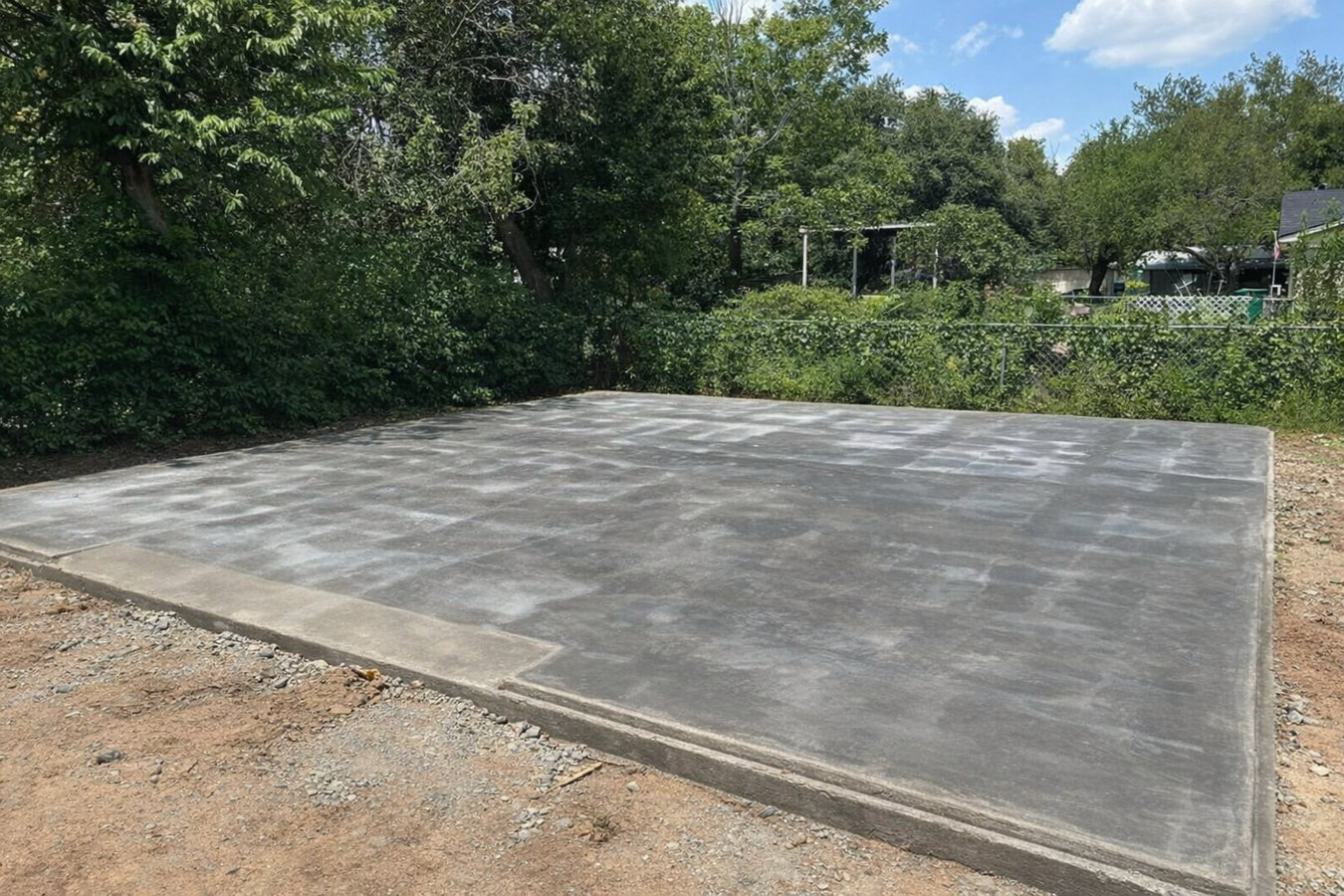
You need a foundation that stays flat and solid through Newport winters, not one that shifts or cracks after the first hard freeze. We build slab foundations for garages, additions, and new structures on Aquidneck Island - with proper site prep, steel reinforcement, and permits handled start to finish.
Slab foundation building in Newport, RI means clearing and leveling the site, placing a gravel drainage bed, installing steel reinforcement inside the forms, and pouring a single thick concrete layer that serves as both floor and base - most residential projects take three to seven days of active work, with the concrete reaching full strength over about 28 days.
Newport homeowners run into slab projects most often when adding a detached garage, expanding a living area, or replacing an outbuilding that sat on a deteriorated old slab. The challenge here is that Aquidneck Island soil is variable - sandy fill in some spots, moisture-heavy ground near the water - and that variability has to be accounted for before the pour, not discovered after. If your project also involves full foundation installation with walls and a basement, we can discuss which approach fits your plans and budget.
Newport lots add practical complications that a contractor unfamiliar with the area may not plan for - narrow driveways, mature trees close to the work zone, and neighboring structures that limit equipment access. These are things we factor into every estimate before anyone shows up to work.
If you are adding a garage, home addition, or accessory structure to your Newport property, a slab foundation is often the starting point. Without a proper foundation, any structure built on top will shift, settle unevenly, and cause serious problems with the walls and roof above it. If your project involves any new construction that sits on the ground, a slab is part of the conversation.
Small hairline cracks in concrete are normal and usually harmless. But if you notice cracks that are widening, lengthening, or starting to let water in - especially after Newport's wet winters or spring thaw - the slab may be failing underneath. Cracks running diagonally from corners of doorways or windows are worth having a professional evaluate.
Newport receives around 47 inches of rain per year, and the island's soil does not always drain quickly. If water sits on your slab or collects against the foundation edges after storms, water is finding a path it should not have. Over time, standing water works into small gaps, freezes in winter, and forces those gaps wider - turning small problems into expensive ones.
If you are tearing down an old garage or shed and replacing it with something new, the existing slab may not be suitable to build on again. Old slabs can have hidden cracks, inadequate thickness, or missing reinforcement that will not support a new structure safely. A fresh slab built to current standards gives your new structure the solid start it needs.
Every slab project starts with site assessment and subgrade preparation - evaluating the soil, compacting the base, and bringing in a gravel drainage layer where the site calls for it. This preparation phase is not visible once the concrete is down, but it is what determines whether the slab stays flat and stable for decades or starts shifting after a few hard Newport winters. We handle everything from clearing the site and setting forms through steel placement, the pour itself, and curing protocol management.
We pull the Newport building permit on every foundation project and schedule the required inspections as part of the job - you do not have to track that yourself. If your project also requires concrete footings as part of a larger structure, those can be coordinated in the same project sequence to reduce disruption and total timeline. We provide a written scope before any work begins, including how we plan to handle your specific lot conditions.
Suited for detached garages, sheds, and accessory structures being built on Newport properties where no slab currently exists.
Best for ground-floor additions expanding the footprint of an existing Newport home, requiring a slab that connects cleanly with the existing structure.
For properties where the existing slab has failed, shifted, or lacks reinforcement adequate for the new structure planned on top of it.
A single integrated pour for projects where the footing and slab floor are combined, reducing joints and simplifying the construction sequence.
Aquidneck Island sits in a coastal freeze-thaw climate, and Newport winters will find every weak point in a slab that was not built correctly. Concrete poured in the wrong season without proper curing protection, or placed on soil that was not adequately compacted, will crack and shift within a few years - sometimes within the first winter. The soil itself is part of the challenge. Parts of Newport near the harbor and Thames Street waterfront have a high water table that affects drainage planning, and many lots across the city contain a mix of sandy fill and glacial till that requires careful assessment before a pour. Homeowners in Portsmouth, RI face similar Aquidneck Island soil conditions and the same freeze-thaw demands.
Newport also has a significant portion of its residential areas within historic district boundaries, and new construction - including foundation work - may require review by the Newport Historic District Commission in addition to the standard building permit. That extra step can add weeks to your timeline if you are not planning for it. We have been working on Newport and Aquidneck Island properties since 2020, including in areas like Middletown, RI, and we flag historic district considerations during the estimate phase so you are never caught off guard mid-project. For more on permit requirements, the American Concrete Institute sets the industry benchmarks for slab construction that inspectors use to evaluate work quality.
We start with a short call to understand your project - what you are building, roughly what size, and where on your property. We then schedule a site visit, because Newport lot conditions vary enough that a phone estimate is rarely accurate. Plan to get a written quote within a few days of the visit.
Once you agree to the scope and sign a contract, we apply for the required Newport building permit on your behalf. Permit review typically takes one to three weeks - longer if your property is in a historic district. We track the status and keep you informed so you are not left wondering what is happening.
With permits in hand, the crew clears the area, excavates, compacts the subgrade, and lays the gravel drainage base. Wooden forms are then set to define the slab shape and edges. This phase is unglamorous but critical - it is what determines whether the slab stays level for decades.
Steel reinforcing rods are placed in a grid inside the forms before the concrete truck arrives. The pour typically happens in a single day. Afterward, the crew covers the slab to manage curing - especially important in Newport's variable spring and fall weather. A building inspector will visit at required stages, and we schedule those visits as part of the job.
We respond within one business day, provide a free written estimate after a site visit, and handle the Newport permit from application through approval.
(401) 344-4828Aquidneck Island soil is not uniform. Sandy fill, glacial till, and high water table zones all require different preparation before a pour. We visit every site before writing an estimate so we know what your specific lot calls for - and so the quote you receive reflects actual conditions, not a best-case assumption.
Newport's permitting system has more layers than most Rhode Island cities, and a significant portion of properties require historic district review that can add weeks to a timeline. We handle the application, flag review requirements early, and give you a realistic schedule from day one - not a guess that falls apart when complications arise.
We schedule pours for weather windows that give the concrete the right conditions to cure properly, and we use reinforcement and mix specifications suited for Newport's coastal climate. A slab that shifts or cracks in year two is not a foundation - it is a problem waiting to get expensive.
We are registered with the Rhode Island Contractors' Registration and Licensing Board, and we work exclusively on Aquidneck Island and surrounding communities. You can verify contractor registration status through the state's online lookup before you sign anything - and we encourage you to.
These are not marketing claims - they are the specific things Newport homeowners have told us matter most when choosing a contractor for foundation work. We stand behind every slab we pour, and we are reachable if you ever have a question after the job is done.
Full foundation installation for new homes and major additions in Newport - basement, crawl space, and slab options handled from permit through final inspection.
Learn MoreProperly sized and placed concrete footings in Newport, poured below Rhode Island's frost line to keep your structure stable through every freeze-thaw cycle.
Learn MoreSpring and summer slots fill fast on Aquidneck Island - reach out now and we will visit your site, assess the conditions, and give you a clear written number before you commit to anything.