
Loading...
Serving Newport, RI and surrounding areas. (401) 344-4828
Your slope is washing away every time it rains. We build concrete retaining walls in Newport that stop erosion, protect your foundation, and give you usable yard space you can count on.
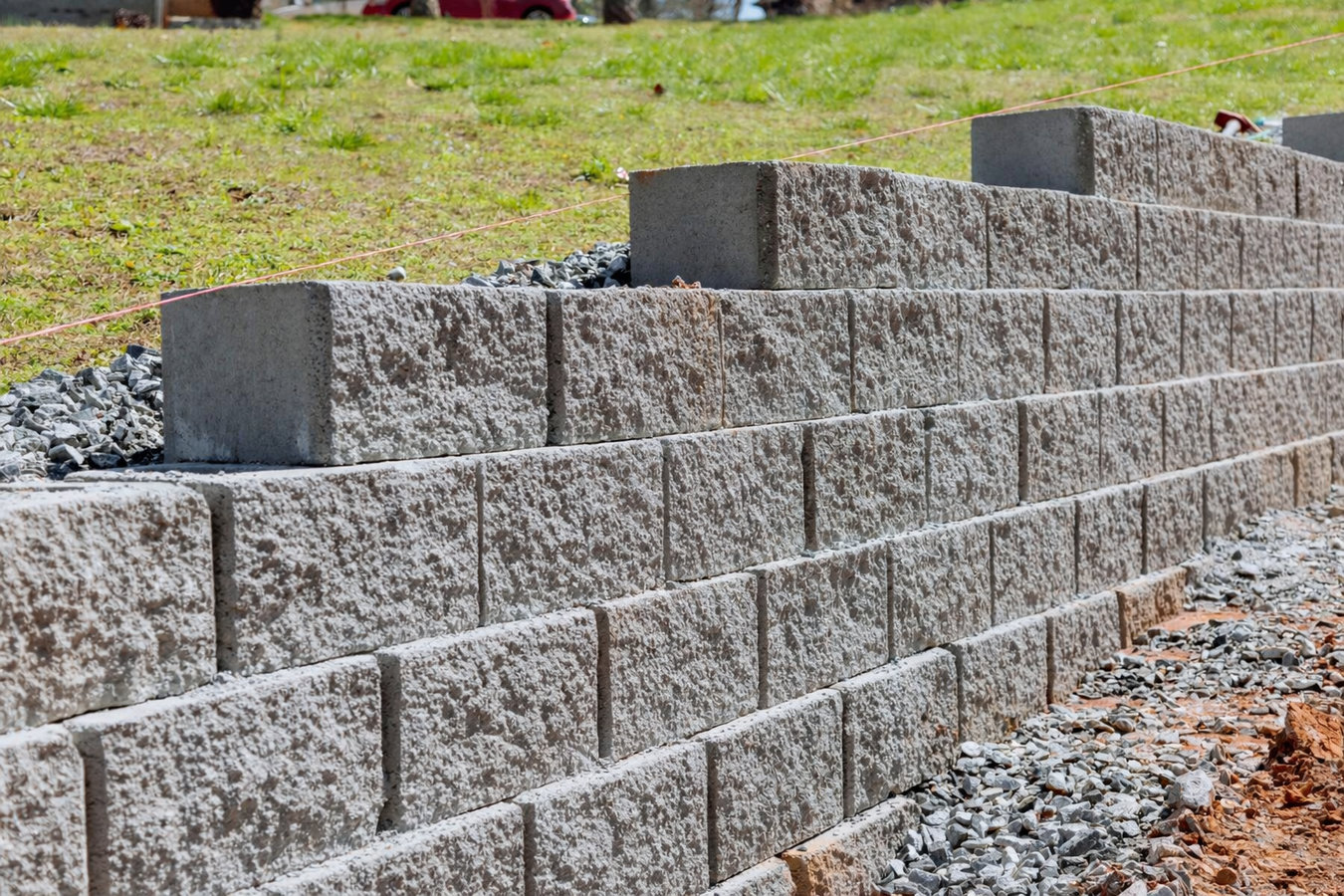
Concrete retaining walls in Newport hold back soil on sloped or uneven properties, keeping it from sliding, washing away, or collapsing onto a lower area - most residential wall projects take two to five days from start to finish, depending on the wall length and height.
If your yard has been losing soil after every rainstorm or you have a slope you simply cannot use, a retaining wall is the permanent fix. Newport gets roughly 47 inches of rain per year, and sloped properties without support lose ground steadily over time. Many homeowners also pair a wall with concrete floor installation when finishing a basement space beneath a graded yard.
Whether you are stopping active erosion, regrading a hillside lot, or protecting your foundation from water that pools after storms, the right wall - built with a frost-depth footing and proper drainage behind it - handles all of those problems at once.
If soil, mulch, or gravel collects at the bottom of a slope after every rainstorm, your land is eroding. Newport gets nearly 47 inches of rain per year, and sloped properties without support lose ground steadily. Left alone, this erosion can undermine plantings, damage hardscaping, and eventually threaten your foundation.
A retaining wall that is visibly tilting, showing wide cracks, or pulling apart at the joints is failing. In Newport's freeze-thaw climate, walls without deep footings or proper drainage often reach this point within 15 to 20 years. A leaning wall will eventually fall - the longer you wait, the more damage you will have to deal with.
If part of your yard is too steep to mow safely, plant in, or let children play on, a retaining wall can turn that slope into a flat, functional terrace. Many Newport homeowners with hillside lots have reclaimed outdoor living space this way - adding a patio, garden bed, or lawn where there was only a difficult slope before.
When the ground around your home does not drain properly, water collects against your foundation - a serious concern in Newport's older housing stock. If you notice standing water near your house after heavy rain or damp basement walls following storms, poor grading and soil movement may be the cause.
We build poured concrete retaining walls for residential and light commercial properties across Newport and the surrounding area. Every wall starts with a proper footing dug below the frost line - typically 36 to 48 inches in Rhode Island - and includes a gravel drainage layer and perforated pipe behind the wall face so water never builds up and pushes outward. If you need structural support for a deep footing project, we also offer concrete footings as a standalone service.
For walls that need to carry weight above or tie into a broader landscaping project, we can integrate the wall with surrounding grade changes, steps, and drainage systems. Many retaining wall projects in Newport also involve slope stabilization before or after the wall itself is poured - we coordinate all of that on your behalf so you are not managing multiple crews. If you are comparing poured concrete against a block retaining wall, the key difference for Newport properties is that poured concrete handles the freeze-thaw cycle and coastal soil movement better over the long term.
Suited for homeowners with eroding hillside lots or sloped yards they want to reclaim as flat, usable space.
Suited for properties where water pools near the house and needs to be redirected away from the foundation.
Suited for properties with long gradual slopes that benefit from multiple stepped wall sections rather than a single tall wall.
Suited for homeowners replacing a failed or leaning older wall, especially in Newport's pre-1950 housing stock where original drainage was never installed.
Newport sits in USDA Hardiness Zone 7a and experiences repeated freeze-thaw cycles each winter, where the ground freezes, expands, and thaws - sometimes multiple times in a single week. Any retaining wall footing that is not dug deep enough will shift and crack over time as the ground moves beneath it. Newport's proximity to Narragansett Bay also means many properties sit on sandy or fill soils that shift more readily than inland clay-heavy ground. Salt air can accelerate surface wear on exposed concrete over time, so mix selection and sealing matter here in ways they simply do not in inland markets.
Newport also has a large share of homes built before 1950, many with retaining walls that were built without proper drainage behind them and have simply reached the end of their useful life. Homeowners in Middletown, RI and Jamestown, RI face many of the same coastal soil and freeze-thaw conditions. If you are replacing an older wall rather than building new, budget for the possibility that drainage issues will need to be corrected at the same time - that is standard on older Newport-area properties, not an unexpected add-on.
Reach out by phone or through our contact form - we reply within one business day. We will ask a few questions about the wall's location, size, and slope, then schedule a free on-site visit before giving you a written price.
We walk the property, check soil conditions, and measure the area. If your wall exceeds four feet in height or your property is in a Newport historic district, we handle the permit and review applications on your behalf - you do not have to navigate that alone.
We dig to below the frost line, pour the footing, build the wall, and install gravel and drainage pipe behind it before backfilling. This is the noisiest phase - typically two to three days for a standard residential wall.
After the wall is complete, we restore the work area and walk you through the curing timeline - about a week before light use, roughly a month before full strength. If a permit was pulled, we coordinate the city inspection.
Free on-site estimate. No pressure. We reply within one business day.
(401) 344-4828Newport winters require footings dug at least 36 to 48 inches below grade - deeper than many inland markets. We never cut corners on footing depth, because a wall that shifts in year three is not a wall that was built right.
The number one reason retaining walls fail is water pressure building up behind them. Every wall we pour includes a gravel layer and perforated drainage pipe behind the face - installed before backfill, not as an afterthought. The Portland Cement Association recommends this as standard practice.
Portland Cement AssociationIf your project requires a building permit or a Historic District Commission review, we handle the application. We know Newport's local process well enough that our clients do not have to spend weeks figuring it out themselves.
We hold a current Rhode Island contractor registration through the Rhode Island Contractors' Registration and Licensing Board. You can verify that registration before signing anything - and you should.
Rhode Island CRLBWhen you put those proof points together, the picture is consistent: we build walls that handle Newport's specific conditions rather than applying a one-size-fits-all approach. That matters more here than it does in most markets.
Install a new concrete floor in your basement or garage - often the next step once a retaining wall has corrected the drainage and grading around your home.
Learn MoreDeep footing work for structures that need a frost-proof base independent of the wall itself, including additions and outbuildings on sloped Newport lots.
Learn MoreContractor schedules in Newport book fast once the ground thaws. Reach out now and we will get your estimate on the calendar before the rush.