
Loading...
Serving Newport, RI and surrounding areas. (401) 344-4828
A cracked or uneven sidewalk is a trip hazard and a liability. We build concrete sidewalks in Newport that are permitted, properly graded, and built to handle coastal winters.
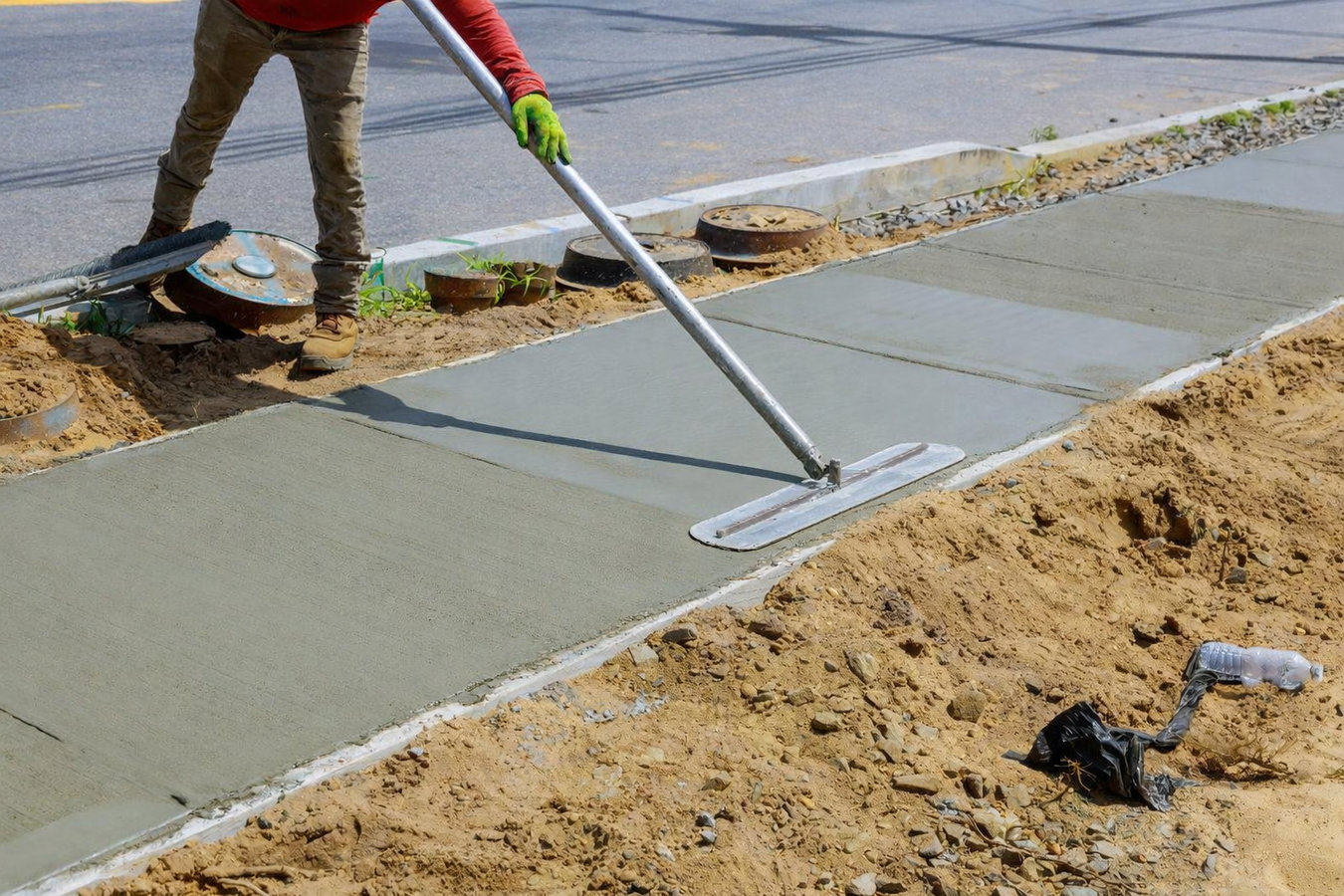
Concrete sidewalk building in Newport, RI involves removing the old surface or preparing bare ground, installing a compacted gravel base, forming and pouring the slab, and finishing with a broom texture for traction - most residential jobs take one to two days of active work, with a curing period of five to seven days before foot traffic.
The gravel base layer is the part that most homeowners never see and most contractors shortcut. Without it, even a well-poured sidewalk can crack or sink within a few winters. Newport soil conditions - particularly near the waterfront, where fill and sandy substrate are common - make proper base preparation more important here than in most inland areas. If you are also replacing a concrete driveway at the same time, we can often coordinate both projects to reduce disruption and cost.
Newport requires a permit for new sidewalk work and for substantial replacements, especially where the sidewalk touches the public right-of-way. We handle the permit application on your behalf - you should not need to visit any city office or figure out which approval comes first. The City of Newport Public Works oversees this process, and permitted work is inspected - which protects you as the homeowner.
Hairline cracks are mostly cosmetic, but when a crack is wide enough to slip a pencil into, water is getting in. In Newport's freeze-thaw winters, that water expands when it freezes and makes the crack wider every season. What looks minor now can become a broken slab or a trip hazard within two or three winters.
If one section of your sidewalk has risen or sunk relative to the one next to it - creating a lip or step that was not there before - the ground underneath has shifted. This is a tripping hazard and a liability concern, especially if the sidewalk fronts a public street. Newport's variable soil conditions make this settling more common than in inland areas.
If the top layer of your sidewalk is peeling off in thin chips or crumbling at the edges, the surface has been damaged by freeze-thaw cycles or salt exposure. This is called spalling, and once it starts it tends to spread. Newport homeowners often notice this accelerating after a harsh winter or a season of heavy road salt use on adjacent streets.
A properly built sidewalk is slightly sloped so water runs off to the side. If puddles form on your sidewalk after rain, or water drains toward your foundation, the slope is wrong - either from original construction or from settling over time. Standing water speeds up surface wear and creates an icy patch in winter that is dangerous for anyone walking by.
We build new sidewalks from scratch and replace failing ones. Every job includes demolition and haul-away of the old concrete (if applicable), gravel base installation, forming, pouring, and a broom-finished surface with the right texture for grip in wet and icy conditions. Control joints are cut at proper intervals to give the concrete planned places to flex rather than cracking randomly. We also assess the drainage slope during the estimate - not after the concrete is poured.
For homeowners who want to upgrade beyond standard gray concrete, we can connect your sidewalk project with garage floor concrete or other flatwork on the same property. Combining projects when the crew is already on-site often reduces overall cost and disruption. The National Ready Mixed Concrete Association recommends using a mix designed for freeze-thaw and salt exposure in coastal New England climates - that is what we specify on every Newport sidewalk project.
Best for properties that have no sidewalk at all or where the existing surface is beyond repair.
The right choice when cracking, spalling, or drainage problems are too far gone for patching to hold.
A targeted option for properties where only a few panels are damaged and the rest of the walk is structurally sound.
Works well when an existing narrow walk needs to be brought up to current width standards or improved for accessibility.
Newport's freeze-thaw winters are the primary threat to any concrete surface here. Temperatures in Newport regularly cycle above and below freezing multiple times in a single week - and every time that happens, any water inside the concrete expands, pushing the material apart from the inside. Over several winters, this is one of the main reasons sidewalks in Newport crack, flake, or heave. Using the right concrete mix and applying a quality sealer after the job is done are not optional extras - they are what separates a sidewalk that lasts 25 years from one that needs replacing in five. Homeowners in Portsmouth, RI face the same coastal conditions and the same freeze-thaw pressures as Newport - we serve the whole island with the same standards.
Salt is the other factor that sets Newport apart from inland markets. Road salt from city streets and salt air off Narragansett Bay both cause the top layer of concrete to flake off over time - a process called spalling - and it tends to accelerate after the first few winters if the surface was not properly sealed. Newport's older housing stock adds another layer of complexity: many lots on streets like The Point and the Broadway corridor have tight access that limits equipment, and some properties have soil that has settled or shifted over more than a century. Homeowners in neighboring Tiverton, RI deal with similar soil variability along the waterfront. We assess your specific site conditions before quoting - not after.
We respond within one business day. We visit your property to measure the sidewalk, assess the soil, and check drainage - because a photo description never captures what the site actually needs. The estimate visit is free and comes with no obligation.
Once you approve the written quote, we apply for the required city permit. In Newport, this process can take one to two weeks depending on current city workload - we factor that into the schedule so there are no surprises on your end.
On pour day, we remove the old concrete (if applicable), grade and compact the base, set the forms, and pour and finish the slab in a single session. The crew will block off the area and keep you informed about access during the day.
The concrete needs five to seven days before foot traffic. After it fully cures, we do a final walkthrough to confirm the surface, edges, and drainage all look right. You get written care instructions - including a sealing schedule to protect against Newport's salt and freeze-thaw conditions.
We visit your property, assess your site, and give you a written quote with no obligation - covering demo, base work, materials, permit, and labor in one number.
(401) 344-4828We are registered with the Rhode Island Contractors' Registration and Licensing Board - a requirement for any contractor working on your home in this state. You can verify our registration at any time. That registration means insurance and a bond are in place, and you have legal recourse if something goes wrong.
Newport sidewalk projects require a city permit, and work near the public right-of-way has additional requirements. We handle the permit application, coordinate with city inspectors, and make sure the job is on the record when it is done. You do not have to call any office or attend any inspection.
We specify a concrete mix and base depth suited for Newport's freeze-thaw climate and coastal salt exposure - not a generic spec copied from a suburban project. The base preparation we do on every job is invisible once the concrete is poured, but it is the main thing that determines how long the surface holds up.
Our written estimates include demolition, base, forming, concrete, finishing, permit fee, and haul-away in a single total. No line items appear after you have said yes. Read more about how we price and run projects on our about page.
A sidewalk built with shortcuts looks fine for the first winter. The problems show up in the second or third season. If you want to talk through your project before committing, contact us and we will give you a straight answer.
More detailed guidance on concrete installation standards is available from the American Concrete Institute. For permit requirements in Newport specifically, the Rhode Island Contractors' Registration and Licensing Board lets you verify contractor registration online.
Durable garage floor concrete designed for Newport's moisture and temperature swings, poured with the same care we put into every outdoor slab.
Learn MoreA full concrete driveway replacement built with proper base depth and drainage to survive Aquidneck Island winters for decades.
Learn MoreNewport's permit season and contractor schedules fill up fast - reaching out now means your sidewalk is done before summer, not after it.