
Loading...
Serving Newport, RI and surrounding areas. (401) 344-4828
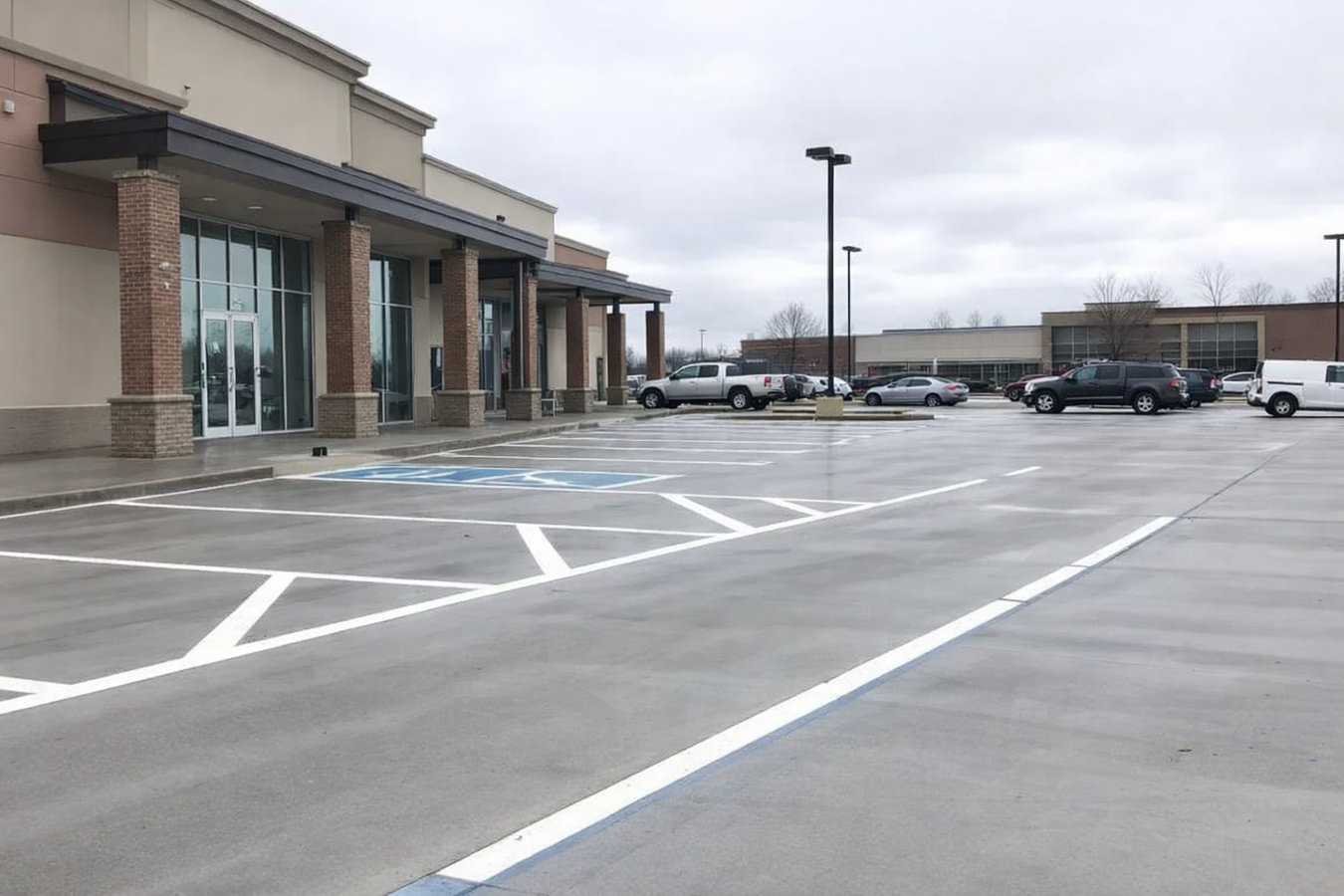
A cracked, uneven, or muddy parking surface is a daily frustration. We build concrete parking lots in Newport that drain properly, hold up through Rhode Island winters, and require far less upkeep than asphalt.
Concrete parking lot building in Newport, RI involves site excavation, a compacted crushed-stone base, forming, pouring, and finishing the slab - most small to mid-size lots take two to five days of active work, followed by at least seven days of curing before any vehicles can use the surface.
Newport property owners come to us for parking lot work for a few different reasons: replacing a worn-out asphalt surface that has cracked through too many winters, converting a gravel or dirt area into a solid paved surface, or adding a formal parking area to meet the city's zoning requirements for a rental or commercial property. In every case, the job that matters most is the one happening underground - the base. A properly compacted gravel base is what keeps a concrete slab level and crack-free through years of freeze-thaw cycles. Skip that step and even good concrete will fail early. If your project also includes site flatwork or a concrete driveway, we can scope both together.
Newport's tight lots, older neighborhoods, and coastal climate add complications that a contractor unfamiliar with Aquidneck Island may not anticipate. Narrow streets near the Point or the Hill can make getting a concrete truck into position a real puzzle. Salt air year-round and heavy road salt in winter put extra demands on the concrete mix. We factor all of that in before we give you a price.
If sections of your parking area have risen, sunk, or cracked so the lot is no longer level, the surface has likely reached the end of its useful life. In Newport, this kind of damage is common in older asphalt or deteriorated concrete lots that have been through many winters without proper maintenance. Uneven surfaces are a trip hazard and can damage vehicle tires and suspension over time.
If water pools in your parking area after every rain and sits there for hours or days, the surface is not draining properly. In Newport's wet coastal climate, standing water works its way into cracks, freezes in winter, and speeds up surface damage fast. A new concrete lot built with the right slope and drainage plan solves this problem for decades.
If you are parking on gravel or packed dirt and constantly raking ruts, filling potholes, or dealing with mud tracked into your home or business, a concrete surface eliminates all of that. Gravel lots tend to migrate toward the edges over time - especially in Newport's wet winters - leaving bare spots and drainage problems that keep coming back.
If the top layer of your existing surface is flaking off in thin chips - especially near edges or areas where road salt collects - salt exposure and winter road treatment have compromised the material. Once flaking starts it tends to accelerate. Replacing the surface with a properly mixed and sealed concrete lot stops the cycle before it gets worse.
Every parking lot we build starts with a site visit to assess existing surface conditions, drainage patterns, equipment access, and any permit or historic district considerations specific to your property. We handle all excavation, base compaction, forming, and concrete work in-house - and we pull every required permit through Newport's building department before breaking ground. The slab is finished with a broom texture for wet-weather traction and cut with control joints so any future shrinkage cracking happens in neat lines rather than random breaks across your lot.
Newport's coastal salt environment means the concrete mix we use is specified for low permeability, and we discuss sealer options with every client before we leave the site. For properties that also need concrete footings for a garage or accessory structure nearby, we can coordinate both scopes to keep the project moving efficiently. We also have a well-established process for navigating the tight access situations common in Newport's older neighborhoods - something that becomes a real problem for contractors who have not worked here before.
For properties converting from gravel, dirt, or bare earth to a permanent concrete surface - including full excavation, base prep, and slab.
For lots where the current asphalt or concrete has cracked, heaved, or failed - removal of the old surface and full rebuild.
For sites with known standing water issues - slope and drainage planned from the start so the surface performs correctly after every rain.
For Newport short-term rental and multi-unit property owners who need a formal paved surface to satisfy zoning parking requirements.
Newport is not a typical suburban market, and parking lot work here reflects that. The city's older neighborhoods - The Point, the Hill, Kay-Catherine - were built long before modern construction equipment existed, which means narrow streets, low-hanging trees, and irregular lot shapes are the norm rather than the exception. Getting a concrete truck and pump positioned correctly takes planning, and contractors who have not worked in these neighborhoods regularly tend to underestimate what it takes. Newport's stormwater rules also add a layer of planning that not every contractor accounts for: new impervious surfaces need to handle runoff in a way that does not push water onto neighboring lots or into the storm drain system at a rate the city considers problematic. Rhode Island DEM stormwater standards provide the technical framework, and Newport applies these on a property-by-property basis.
The coastal exposure here adds to the upkeep equation in ways that inland Rhode Island does not. Salt air off Narragansett Bay works on every exposed concrete surface year-round, and road salt application in winter accelerates surface wear on anything that is not mixed and finished correctly. We serve property owners across Newport and into Middletown and Portsmouth, and the salt-air and freeze-thaw factors follow us across all three communities on Aquidneck Island. We build every lot to handle those conditions from day one.
We come to your property to look at the existing surface, check drainage, note any access challenges, and assess permit and historic district requirements. We reply within 1 business day to schedule. No price is given until we have seen the site in person.
We handle the permit application through Newport's building department and confirm whether a Historic District Commission review applies to your address. Work does not start until all approvals are in hand - your project will not be stopped mid-construction for a missing approval.
The existing surface is removed, the area is excavated to the right depth, and a compacted crushed-stone base is installed. This phase typically takes one to two days and is the most critical part of the whole project - it is what keeps the slab level for years.
Forms go up, concrete is poured and broom-finished, and control joints are cut. After a minimum seven-day curing period, we walk the lot with you, explain care instructions, and discuss sealing options suited to Newport's salt-air environment.
We visit your site before we quote - no obligation, no pressure. Most estimates are scheduled within 1 business day.
(401) 344-4828Puddles and runoff problems do not get paved over - they get designed out. We slope and drain every lot so water moves away from buildings and off the surface the way it should. Newport's stormwater rules require it, and our clients appreciate not having to call us back about standing water.
Newport's building department and Historic District Commission review process is familiar territory for us. We check your address against district boundaries, handle the application, and schedule the required inspections - you never have to make a call to city hall or wonder if the project is legal.
Salt air and road salt are a real factor in Newport, and we specify a concrete mix with a lower water-to-cement ratio on every parking lot we build here. The result is a denser surface that resists the salt penetration and surface flaking that shortens the life of parking lots built to a generic spec. The American Concrete Pavement Association recommends these practices for coastal climates.
We have worked in Newport's older neighborhoods long enough to know how to position equipment on a narrow street off Thames or navigate a small lot entrance in the Point. Logistics that surprise out-of-area contractors are part of our standard planning process - and our prices reflect what the job actually requires.
These are not talking points - they are the specific things that determine whether a parking lot holds up over time in Newport or starts failing within a few winters. We build lots that last because we account for local conditions at every step, not just during the pour.
Structural concrete footings poured to Rhode Island's 48-inch frost depth for decks, additions, and new construction on Newport properties.
Learn MoreResidential concrete driveway installation for Newport homes - properly sloped, reinforced, and finished to handle coastal salt exposure and freeze-thaw cycles.
Learn MorePermit season fills up fast on Aquidneck Island - reach out now to lock in your start date before the spring rush.